
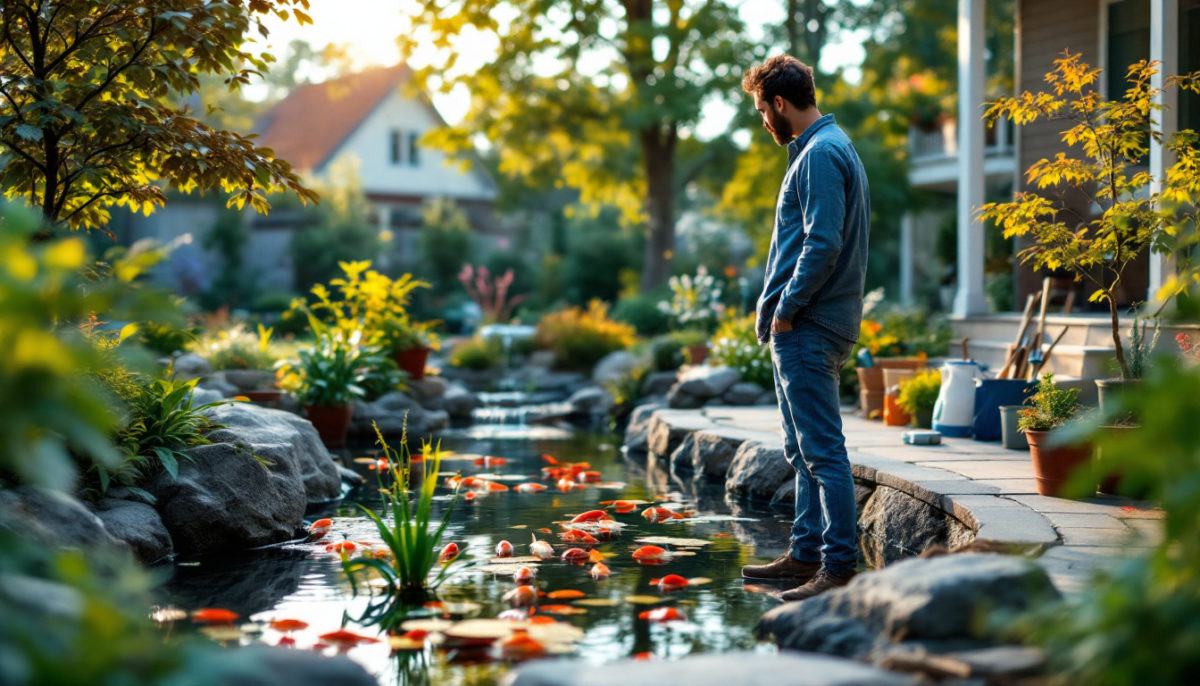
A koi pond can be one of the most attractive features of a property — but when you’re buying the house, don’t just look at the fish. Look at the system behind them.
Why is Brightchecker writing about koi ponds?
A koi pond might look like a beautiful feature when you’re viewing a property, but it can also come with pumps, filtration, pipework, drains, electrical equipment and ongoing maintenance requirements.
At Brightchecker, we believe property buyers should look beyond what catches the eye and understand what they’re actually taking on. This article combines general guidance with my own experience of buying and maintaining a property with a koi pond for the past two years.
I bought a house with a koi pond. I had never kept koi before, and I wish someone had told me some of these things before I bought the property. After two years of ownership, I’ve learned a lot — and I’ve shared my top tips for potential buyers at the bottom of this article.
Important: this is a visual property-buying checklist, not specialist koi-keeping or veterinary advice. If you’re seriously concerned about the condition of a pond or its fish, seek advice from an appropriately qualified specialist.
Essential Inspection Checklist
When viewing a property with a koi pond, bring this checklist along to ensure you’re making an informed decision. Don’t be afraid to ask the current owner detailed questions—their answers will reveal a lot about how well the pond has been maintained.
Structural Elements
□ Check for cracks or leaks in the pond structure
□ Inspect the edging and surrounding hardscape for stability
□ Look at the pond depth and ask the owner how deep it is.
□ Examine retaining walls or slopes for signs of erosion
□ Visually check external electrical equipment for obvious damage, deterioration or exposed wiring, and ask the owner about its installation and maintenance.
Filtration and Water Quality
□ Identify all components of the filtration system
□ Check that pumps appear to be operating and ask the owner how old they are.
□ Look at water clarity and note whether the pond appears unusually cloudy, dirty or poorly maintained.
□ Look for signs of algae problems or water imbalance
□ Verify that there’s adequate water circulation throughout the pond
Fish Health and Pond Ecosystem
□ Observe fish behaviour and note anything that appears unusual or concerning. If you have concerns about the fish, seek specialist advice.
□ Look for obvious signs that the fish may be unhealthy and seek specialist advice if you have concerns.
□ Check for appropriate fish stocking levels (overcrowding is common)
Are the Koi Included in the Sale?
This might seem like an obvious question, but it’s one that many buyers forget to clarify until closing day. Koi can be extremely valuable—with prize specimens sometimes worth thousands of dollars each. Because of their value and the personal attachment owners develop, sellers sometimes plan to take their fish with them to their new home.
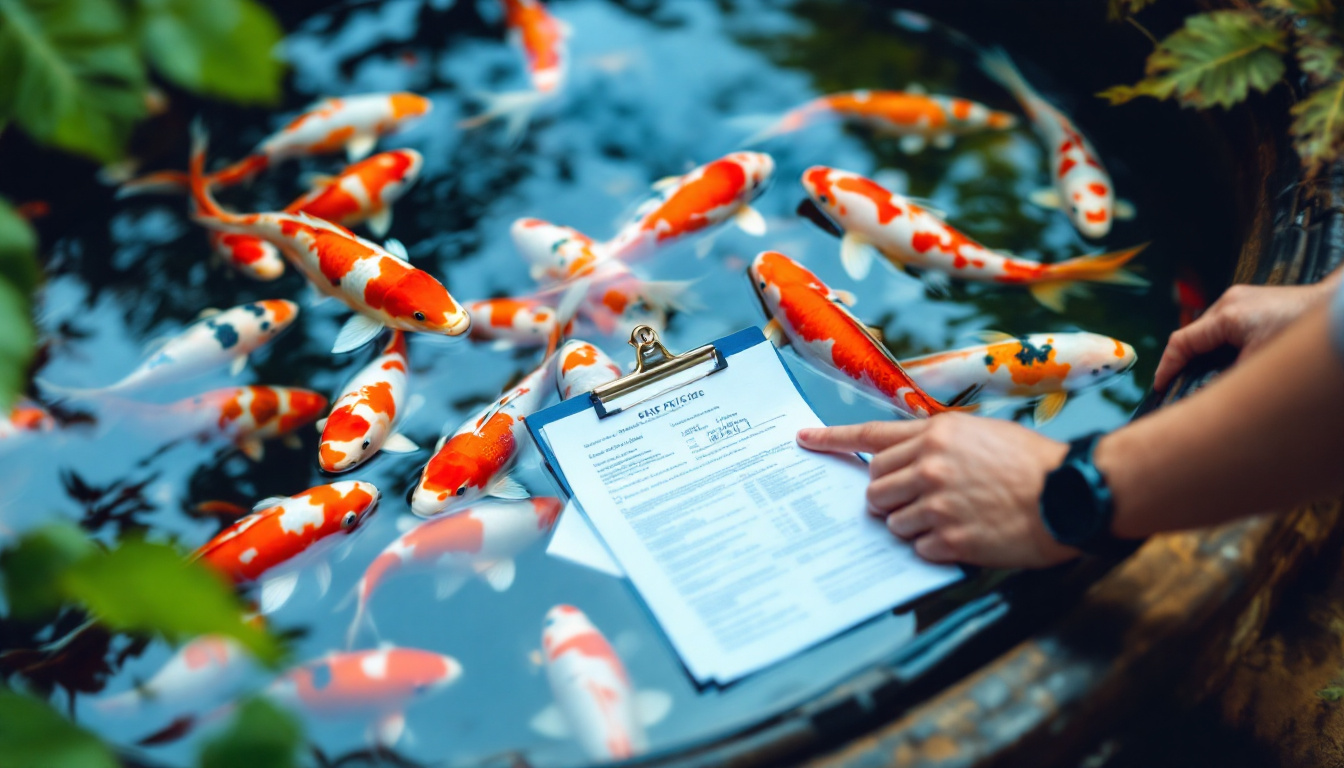
If the koi are included, make sure this is explicitly stated in your purchase agreement. Ask for documentation about each fish, including approximate age, variety, and any special care requirements. Some sellers might be willing to provide a “training session” on pond maintenance before they move out.
If the seller plans to take the fish, you’ll need to decide whether you want to purchase new koi or perhaps convert the pond to another type of water feature. Either way, having clarity on this point will prevent disappointment and confusion during the property transfer.
Common Problems to Watch For
When evaluating a property with a koi pond, be on the lookout for these common issues that might require expensive repairs or redesigns after purchase.
Inadequate Filtration
Many residential koi ponds are built with filtration systems that are too small for the pond volume or fish load. Signs of inadequate filtration include cloudy water, excessive algae growth, and fish that appear to be gasping at the surface.
Ask the current owner about their maintenance routine and how often they need to clean filters. If they’re cleaning filters more than once a week or constantly battling water quality issues, the system is likely undersized or poorly designed.
Leaks and Structural Issues
Water loss exceeding normal evaporation (more than an inch per week in most climates) suggests a leak. Finding and repairing leaks can be challenging and expensive, sometimes requiring draining the pond and removing fish. Look for damp areas around the pond perimeter, settling of surrounding hardscape, or constant need for water additions.
Concrete ponds may develop cracks over time, especially in areas with freeze-thaw cycles. Liner ponds can develop tears or may have been installed without proper underlayment, leading to punctures. Either scenario typically requires significant reconstruction.
Things I wish I’d known before buying a house with a koi pond
- Think about how you’ll actually enjoy the pond. A pond with a glass viewing panel that you can see from the house or an outside seating area is, in my opinion, far better than one you simply look down into. My wife hated my marine tropical fish tank in the house, but she loves the koi for this reason. Yes, you’ll need to clean the glass occasionally with a non-abrasive pad — but trust me, it’s worth it.
- An old-school gravity-fed filter bay can work, provided the pond isn’t overstocked. But be prepared to clean it about once a week during the summer. If you’re buying a property with an existing pond, I’d seriously consider budgeting for a modern drum filter. They’re considerably less work.
- Buddy up with an experienced koi keeper nearby. This is something I hadn’t considered when I bought the house. Having someone local who knows koi and your particular pond can be invaluable — especially when you go on holiday. You can return the favour for them.
- If there’s no air pump, budget for one immediately. Don’t regard it as an optional extra. During hot weather, warm water holds less dissolved oxygen, and fish can become dangerously oxygen-starved. The 2026 UK heatwaves were a good reminder of how quickly this can become a serious issue.
- Bottom drains are vastly better than most alternatives. If the pond doesn’t have one, I’d factor a retrofit into your budget. A bottom drain removes water from the area where waste and debris naturally accumulate — the bottom of the pond — and makes filtration much more effective.
- Pay close attention to the pipework. I would avoid flexible pipework on a bottom-drain system. It can deteriorate over time, and a failure while you’re away could potentially drain a significant proportion of the pond and put your fish at risk. I replaced the flexible pipework on my pond almost immediately. Fitting rigid pipe wasn’t easy because of the complex bends involved, so this is something I’d definitely check before buying a property.
- I’d also favour larger-diameter pipework rather than narrow 2-inch pipe where practical. Larger pipes are less restrictive and less prone to blockages, although the appropriate diameter depends on the pump, flow requirements and overall system design.
- Netting is essential to stop predators. A hungry heron can empty your pond in days. i found that mine was on a heron flightpath…
The big lesson for me? Don’t just look at the pond and think, “That’s lovely.” Look at the entire system behind it. Find out what filtration it has, how old the pumps and pipework are, whether it has a bottom drain and air system, how easy the filters are to clean, and how much maintenance the previous owner actually did. A beautiful koi pond can be a fantastic feature of a house — but you’re also buying a living ecosystem and a piece of equipment that needs looking after.
Final Thoughts Before You Dive In And Buy a House With a Koi Pond
A home with a koi pond can provide years of enjoyment and create a tranquil outdoor space that becomes your personal oasis.
However, this special feature comes with responsibilities that not every homeowner is prepared to take on. By thoroughly inspecting the pond, understanding the ongoing maintenance requirements, and clarifying exactly what’s included in the sale, you’ll be able to make an informed decision about whether that beautiful water feature is an asset or a potential headache.
A Brightchecker Koi Pond Checklist?
So, the big question: will we build a koi pond checklist into Brightchecker, our property inspection software?
Yes.
But we’ll approach it from the perspective of visual inspection for property buyers — what you can look for when viewing a house with a koi pond, without needing to be a koi expert.
We’ll cover the things I wish I’d known before buying mine, including the pond itself, filtration, pipework, aeration, bottom drains and general condition.
Watch this space. 🐟
About the Author
